

Paramedic Jobs Near Me: Where to Find Openings

Key takeaways
- Paramedics complete 1,200 or more hours of training beyond EMT level and handle advanced care like drug administration and cardiac monitoring.
- The National Registry lists 155,645 nationally certified paramedics in the United States, part of 629,039 certified EMS clinicians overall (NREMT, 2026).
- Local ambulance services, fire departments, and hospital systems post the most paramedic openings, so search those employers directly alongside a dedicated EMS job board.
- A current state license, National Registry certification, and valid driver's license are the baseline credentials nearly every employer screens for first.
- Setting location-based job alerts means new paramedic postings reach you within hours instead of days, a real edge in a fast-moving hiring market.
The fastest way to find paramedic jobs near you is to search local ambulance services, fire departments, and hospital systems directly, then add a dedicated EMS job board with location alerts turned on. That mix surfaces openings most general sites miss. It also gets new postings in front of you before the applicant pool fills.
Demand is on your side if you hold a current license and National Registry certification. The Registry counts 155,645 nationally certified paramedics, and employers in nearly every metro area are hiring. This guide covers how paramedic roles differ from EMT work, where local openings actually live, the credentials employers screen first, how to stand out, and how to set alerts so the next job finds you.
How Do Paramedic Jobs Differ From EMT Positions?
Paramedics operate at the top of the prehospital care ladder, with a scope of practice that extends well beyond what an EMT can do. Where an EMT provides basic life support, a paramedic delivers advanced care: administering medications, interpreting cardiac rhythms, starting IV lines, and managing a patient's airway with intubation.
That expanded role comes from far more schooling. EMT courses usually run a few hundred hours. Paramedic programs typically require 1,200 hours or more of classroom work, clinical rotations, and field internships, often stretching across a year or two. Many programs now award an associate degree alongside the certification.
The gap matters for your job search in two ways. First, paramedic postings are a smaller, more specialized pool, so the right search tools help you cut through noise. Second, paramedics generally command higher pay than EMTs because of the advanced skills and longer training involved. If you are weighing the jump from EMT to paramedic, our guide on how to become an EMT lays out the entry path that comes first.
Where Are the Best Places to Search for Local Paramedic Jobs?
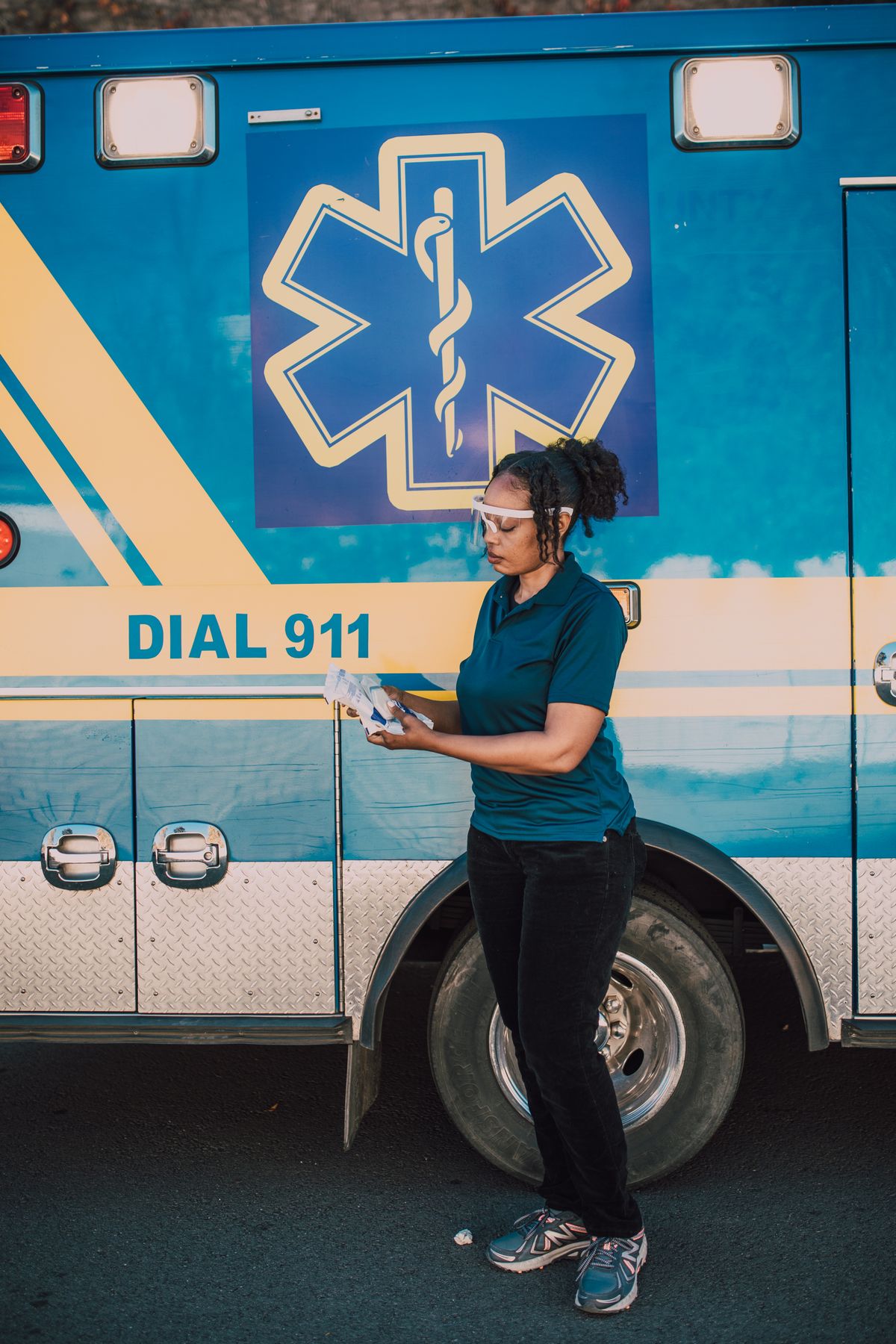
The best places to find paramedic jobs near you are the employers who hire the most of them: private ambulance companies, municipal fire departments, and hospital emergency systems. Most paramedics work for ambulance services or local government, so starting with those sources puts you where the volume is.
Here is a practical search order that works in almost any region:
- Local 911 and private ambulance services. These run the largest paramedic staffs and often post openings on their own career pages before anywhere else.
- Fire departments. Many municipal fire agencies run EMS and hire dual-role firefighter paramedics. Check city and county government job portals.
- Hospital and health systems. Emergency departments, critical care transport, and interfacility teams hire paramedics directly through hospital HR sites.
- A dedicated EMS job board. A board built for emergency medical roles filters out the clutter of general sites. Emtjobs lets you search paramedic openings by location so you see nearby roles in one place instead of scrolling through unrelated listings.
Searching only one channel is the most common mistake. A fire department opening may never appear on a private ambulance company's page, and vice versa. Cast across all four, then narrow by commute distance so you are not applying to jobs an hour past where you want to drive.
What Credentials Do Employers Require for Paramedics?
Nearly every paramedic employer screens the same core credentials before anything else: a current state paramedic license, National Registry certification, and a valid driver's license with a clean record. Miss one and your application often stops at the first filter, no matter how strong your experience is.
National Registry certification is the common thread tying the profession together. The National Registry reports 629,039 nationally certified EMS clinicians nationwide, and 155,645 of them are paramedics (National Registry of Emergency Medical Technicians, 2026). Many states use that certification as the basis for licensure, so keeping it current is non-negotiable.
Beyond the baseline, employers commonly ask for:
- Current CPR and ACLS (Advanced Cardiac Life Support) cards
- PALS (Pediatric Advanced Life Support), often required within the first months of hire
- PHTLS or ITLS for trauma care, depending on the service
- A DOT physical, drug screen, and background check
- Any state-specific endorsements for controlled medications
Keep digital copies of every card and license in one folder so you can attach them the moment a posting goes live. Applications that arrive complete move to the interview stage faster than ones waiting on paperwork.
How Can You Stand Out in a Competitive Applicant Pool?
Standing out starts with speed and specificity. Strong postings for desirable shifts fill quickly, so applying within the first day, with a resume tailored to the exact role, puts you ahead of candidates who send a generic file a week later.
A few moves consistently separate the applicants who get called:
- Quantify your field experience. List call volume, the types of calls you run, and any specialty transport or critical care time. "Ran roughly 2,000 calls annually in a high-acuity urban system" says more than "experienced paramedic."
- Front-load certifications. Put ACLS, PALS, PHTLS, and your National Registry number near the top of your resume where a recruiter sees them in seconds.
- Match the service type. A fire-based department values different strengths than a critical care transport company. Mirror the language in the job posting.
- Line up references early. A former supervisor or medical director who can speak to your clinical judgment carries real weight in EMS hiring.
Interviews often include scenario questions, so rehearse how you would manage a pediatric cardiac arrest or a multi-patient scene out loud. Clear, calm clinical reasoning signals the composure employers want in the field. The same fast-apply discipline that works for paramedic roles applies to entry-level work too, as our guide on finding EMT jobs near you explains in detail.
How Do You Set Alerts for New Paramedic Openings Nearby?
Setting location-based job alerts is the single highest-leverage habit for a local paramedic search, because new postings reach you within hours instead of whenever you remember to check. In a market where the best shifts fill fast, being early is often the difference between an interview and a closed req.
Set your alerts up this way:
- Define your radius first. Pick the commute distance you will realistically drive, then set that as your search area so alerts stay relevant.
- Create a saved search on an EMS job board. On Emtjobs, save a paramedic search filtered to your location and let new matches land in your inbox automatically.
- Subscribe at individual employers. Many ambulance services and hospital systems offer their own job alert signups. Turn those on for the two or three employers you most want to work for.
- Set a national database alert. The National Registry and some state EMS offices post workforce resources that can point you toward hiring regions.
Check your alerts daily and act the same day a strong match appears. Treat the first 24 hours after a posting as your window. Applicants who respond inside it are routinely the ones recruiters screen first, before the pile grows.
The next step is concrete: pick your commute radius, open a paramedic search on Emtjobs, and save it with alerts on today. That one action keeps nearby openings flowing to you while you focus on sharpening the resume and credentials that will win them.
Frequently asked questions
What is the difference between a paramedic and an EMT?
Paramedics complete far more training than EMTs, often 1,200 to 1,800 hours, and can perform advanced skills such as administering medications, interpreting heart rhythms, and inserting breathing tubes. EMTs provide basic life support like CPR and wound care.
Where are the most paramedic jobs located near me?
Private ambulance companies and local government agencies employ the largest share of paramedics. Start with local 911 ambulance services, fire departments, and hospital emergency departments in your area, then widen your radius by commute distance.
What credentials do I need to apply for paramedic jobs?
Most employers require a current state paramedic license, National Registry certification, a valid driver's license, and CPR or ACLS cards. Some add PALS, PHTLS, or a clean background check and physical before hire.
How can I get notified about new paramedic openings quickly?
Set up location-based job alerts on a dedicated EMS job board and with local ambulance services. Alerts push new postings to your inbox within hours, letting you apply early before the applicant pool fills up.
Related Posts:

Do paramedics earn more than EMTs?
Yes. Paramedics typically earn noticeably more than EMTs because of their advanced scope of practice and longer training. Pay varies widely by region, employer type, shift differentials, and overtime, so compare local postings directly.
