

How to Become an EMT: Step-by-Step Guide

Key takeaways
- To become an EMT you need a high school diploma or GED, to be at least 18 in most states, and current CPR certification before you enroll in training.
- A state-approved EMT course runs roughly 120 to 150 hours and combines classroom lessons, skills labs, and supervised clinical or field time.
- Certification requires passing the NREMT cognitive exam and a psychomotor skills test, then applying separately for a license from your state EMS office.
- The Bureau of Labor Statistics reports EMTs and paramedics earned a median $48,150 per year in 2025, with employment projected to grow 6 percent through 2035.
You can become an EMT in about three to six months by finishing a state-approved training course, passing the national certification exam, and applying for a license in your state. The path asks for a high school diploma, a minimum age of 18 in most states, and a willingness to work hands-on in high-pressure situations.
Learning how to become an EMT is one of the fastest ways into a healthcare career that pays a living wage without a four-year degree. The Bureau of Labor Statistics classifies the entry-level education for EMTs and paramedics as a postsecondary nondegree award, and reports that EMTs and paramedics earned a median of $48,150 per year in 2025, according to its Occupational Outlook Handbook. This guide walks through each step in order so you know exactly what to do next.
The five steps in how to become an EMT
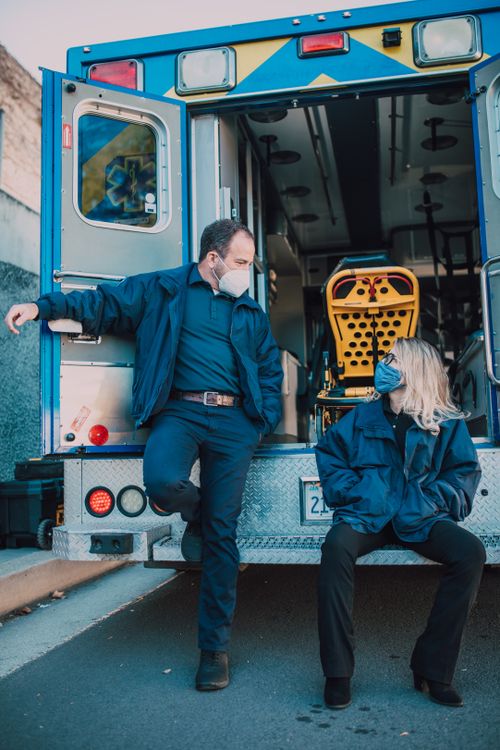
The route to certification follows five clear stages: meet the entry requirements, finish an approved training course, complete your clinical and field hours, pass the national exam, and apply for your license and first job. Each step builds on the one before it, so work through them in order. The sections below cover what to expect at every stage.
Step 1: Meet the basic education and age requirements
Before you enroll in any EMT program, you need to clear a short list of entry requirements. Most states ask for three things up front: proof you are at least 18 years old, a high school diploma or GED, and a current CPR certification at the Basic Life Support level for healthcare providers.
The CPR card matters because many EMT courses require it on the first day. You can earn one through a short course from a recognized provider, often in a single weekend. Keep the physical or digital card, since your program and later your state application will ask to see it.
A few other items commonly come up:
- A valid driver's license, since many EMT roles involve driving or operating an ambulance.
- A criminal background check, which most states run before granting certification.
- Up-to-date immunizations and sometimes a physical exam, because the job exposes you to illness and injury.
None of these require college coursework. If you have finished high school, you already meet the academic bar to start training.
Step 2: Choose an accredited EMT training program
Pick a state-approved EMT program that meets the National EMS Education Standards, because only graduates of an approved course can sit for the national exam. These programs run roughly 120 to 150 hours of combined classroom instruction, skills labs, and supervised clinical time, which most students complete in three to six months.
EMT training is offered in several settings, and the right choice depends on your schedule and budget:
- Community colleges and technical schools, which often bundle the course into a certificate track.
- Fire departments and ambulance services, which sometimes train and hire in the same pipeline.
- Hospitals and dedicated EMS academies, including intensive programs that compress the coursework into about 12 weeks.
When you compare programs, confirm the course is approved by your state EMS office and ask about pass rates on the national exam. A program with strong pass rates and plenty of hands-on lab time prepares you better than one built mostly around lectures. Also check the total cost, including books, uniforms, and testing fees, so there are no surprises later.
Step 3: Complete your clinical and field hours
The hours you spend treating real patients are where classroom knowledge turns into skill. Clinical and field time is built into the 120 to 150 hour program total, and it typically splits between a hospital setting and ride-along shifts on a working ambulance.
During clinical rotations you practice patient assessment, take vital signs, and observe how emergency departments triage incoming cases. On the ambulance, you shadow and assist a certified crew on live calls, which teaches you how to work in a moving vehicle, communicate under pressure, and hand off a patient to hospital staff.

Your program tracks these hours and verifies completion, which the national registry requires before you can test. Treat every shift as practice for the psychomotor exam and for the job itself. The habits you build here, such as scene safety checks and clear patient reporting, carry straight into your first paid role.
Step 4: Pass the NREMT exam and get certified
National certification comes from the National Registry of Emergency Medical Technicians, and it has two parts: a computer-based cognitive exam and a hands-on psychomotor skills test. You must finish an approved course and have your program director verify your hours before you register, and you need to test within two years of completing your training.
The cognitive exam is an adaptive, multiple-choice test delivered at a testing center. It covers patient assessment, trauma and medical emergencies, airway and ventilation, and EMS operations. The psychomotor portion asks you to demonstrate core skills, such as managing a patient's airway or controlling bleeding, in front of evaluators. You can review the current format and requirements directly on the National Registry of EMTs certification pages.
Certification is separate from your state license. Most states use the NREMT exam as the basis for licensure, but you still submit a state application, pay any state fees, and clear a background check before you can legally work. Check your own state EMS office for the exact steps, since timelines and paperwork vary.
Step 5: Apply for your first EMT job
The job market for new EMTs is steady. The Bureau of Labor Statistics projects employment of EMTs and paramedics to grow 6 percent from 2025 to 2035, faster than the average for all occupations, with about 18,200 openings each year over the decade and 284,100 jobs recorded in 2025. EMTs earned a median annual wage of $44,470 in May 2025, and experienced providers who move up to paramedic earned a median of $60,600.
New EMTs are hired by a mix of employers, each with a different pace and schedule:
- Private ambulance and medical transport companies, which often hire in volume.
- Fire departments, where an EMT certification can be a stepping stone to firefighter roles.
- Hospitals and urgent care centers, which use EMTs for patient transport and support.
To move quickly, keep your certification and CPR cards current, write a resume that highlights your clinical hours and any ride-along experience, and apply to several employers at once. A focused job board built for emergency medical roles saves time compared with sifting through general listings, and Emtjobs connects EMTs and paramedics with employers hiring across the United States. For tips on searching efficiently in your area, see our guide on finding and applying to EMT jobs near you.
Your next move is simple: confirm the entry requirements in your state, then enroll in a state-approved EMT course this term. Every step after that follows in order, and within a few months you can be a certified EMT applying for your first shift.
Frequently asked questions
How long does it take to become an EMT?
Most people finish an EMT course in three to six months, then add a few weeks to pass the NREMT exam and process state paperwork. Intensive programs can run as short as about 12 weeks.
Do you need a college degree to be an EMT?
No. The Bureau of Labor Statistics classifies entry-level EMT education as a postsecondary nondegree award. You need a high school diploma or GED and completion of an approved EMT course, not a college degree.
How much does an EMT make?
The median annual wage for EMTs was $44,470 in May 2025, according to the Bureau of Labor Statistics. Pay varies by state, employer type, and shift schedule.
Related Posts:


What is the difference between EMT certification and a state license?
NREMT certification shows you passed the national exam. A state license is separate legal permission to practice, which you apply for through your state EMS office after certifying.
