
EMT Cover Letter Examples That Stand Out

Key takeaways
- A strong EMT cover letter connects your certifications and patient-care experience to the specific agency you are applying to, instead of repeating your resume.
- In a controlled hiring experiment, tailored cover letters produced 53 percent more callbacks than sending no cover letter at all.
- Open with a direct statement of the role you want and your credential, then devote the body to one or two concrete scenes from the field or clinicals.
- Name the employer and reference something specific about them, because a generic letter reads as mass-applied and gets skimmed.
- New EMTs with no paid experience can lead with clinical rotations, ride-alongs, volunteer runs and the NREMT credential.
A strong EMT cover letter does one job: it connects your certification and patient-care experience to the specific agency reading it. Spend three short paragraphs showing that you understand the role and have done the work, and you will stand out from the stack of applicants who attach a resume and nothing else.
That matters more than many new EMTs expect. In a controlled hiring experiment by ResumeGo, applicants who sent a tailored cover letter received 53 percent more callbacks than those who sent no cover letter at all, and 87 percent of the hiring professionals surveyed said they read cover letters (ResumeGo research). For emergency medical roles, where many candidates hold the same credential, that short note is often what decides who gets a phone call.
This guide walks through why the letter still matters, how to structure it, how to highlight your certifications and commitment to EMS, and a full sample you can adapt. It closes with how to tailor each letter to the employer.
Why a Cover Letter Still Matters for EMTs
EMS hiring is competitive, and on paper many applicants look nearly identical. A pile of resumes might all show the same EMT-Basic certification, the same CPR card and a similar training program. The cover letter is where you turn those credentials into a person a supervisor can picture on a rig.
It also answers questions a resume cannot. Why do you want to work for this particular service rather than the one across town? How do you handle a scene that goes sideways? What drew you to emergency medicine in the first place? A field training officer reading applications wants to know you will show up reliably, communicate clearly and keep your head in a crisis. A good letter gives early evidence of all three.
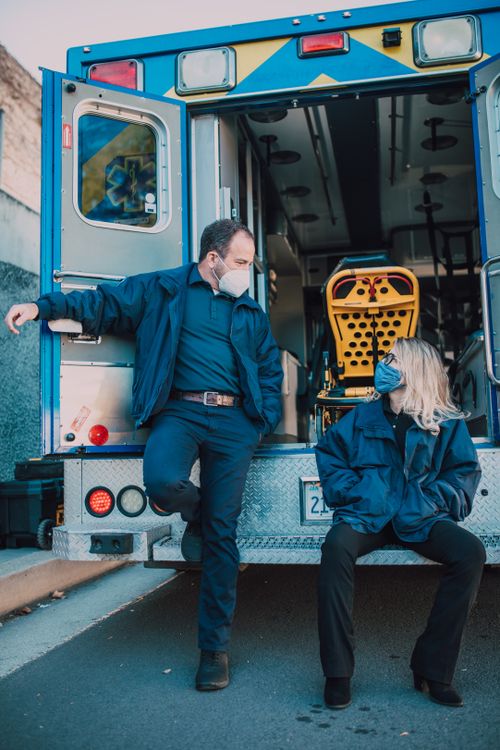
There is a practical reason too. When an opening draws dozens of qualified applicants, hiring managers skim for reasons to shorten the list. A generic letter gives them nothing to hold onto. A specific one, written for their agency and their posting, is a quick signal that you are serious.
Structuring an Effective Cover Letter
Keep the whole thing to a single page, usually three or four short paragraphs. Hiring managers read quickly, so the structure should guide them without making them hunt for your main points.
A reliable layout:
- Header and greeting. Your name and contact details at the top, then address a real person if the posting names one. "Dear Captain Reyes" beats "To Whom It May Concern" every time.
- Opening paragraph. State the exact role you are applying for and your core credential in the first sentence. For example, "I am applying for the EMT-Basic position with County EMS, and I hold a current NREMT certification and a California state license."
- Body paragraph or two. This is the heart of the letter. Pick one or two concrete scenes from the field, your clinical rotations or a related job, and show what you did and what the outcome was. Specifics beat adjectives. "I managed airway and vitals on a cardiac patient during a 20-minute transport" says far more than "I am passionate and hardworking."
- Closing paragraph. Reaffirm your interest in that specific agency, note your availability, and thank the reader. Invite them to contact you for an interview.
Write in plain, active language. Short sentences read as calm and confident, which is exactly the impression you want to leave with someone hiring for a high-stress job. Your cover letter and your resume should work together rather than repeat each other, so keep the letter focused on the stories your resume only hints at.
Highlighting Certifications and Passion for EMS
Your certifications are the price of entry, so state them clearly and early, then move on. List the credential that matters most for the role: NREMT certification, your state EMT or AEMT license, CPR or BLS, and any extras like PHTLS or an EVOC driving course. Put the current and most relevant ones up front rather than burying them in a list.
Passion for EMS is harder, because almost every applicant claims it and the word itself proves nothing. Show it instead. A sentence about the moment you decided to go into emergency medicine, or about staying late after a difficult call to debrief with your crew, communicates far more than the phrase "I am passionate about helping people."
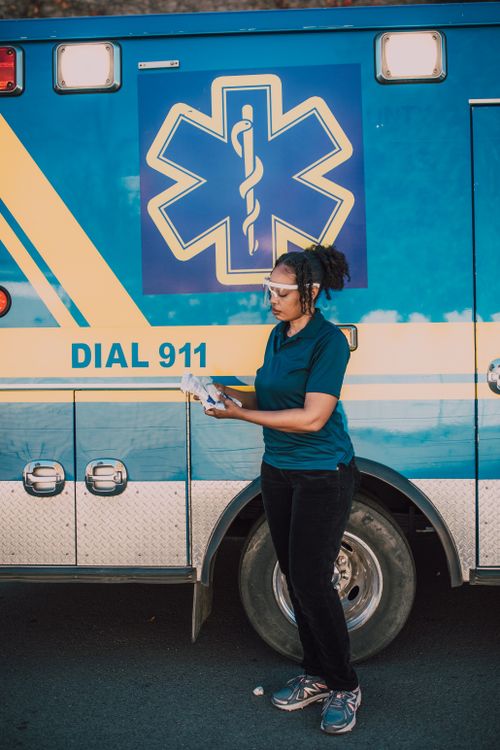
Tie your commitment to the agency's mission where you can. If the service emphasizes community paramedicine, mention your interest in that area. If it runs high call volumes in a busy urban system, note that you want the pace and the experience. This signals that you read the posting and want this job, not just any job.
Sample Cover Letter for New EMTs
If you are early in your career with little or no paid experience, lead with your credential and draw on clinical rotations, ride-alongs and volunteer work. Here is a full example you can adapt. Replace the bracketed details with your own.
Jordan Alvarez
Phoenix, AZ | (555) 123-4567 | [email protected]Dear Ms. Carter,
I am applying for the EMT-Basic position with Valley Regional EMS. I hold a current NREMT certification and an Arizona state EMT license, and I am ready to start as soon as your next hiring cycle begins.
During my EMT program I completed clinical rotations in a Level I trauma emergency department and 48 hours of ambulance ride-alongs with a busy urban service. On one call, I assisted the crew with a patient in respiratory distress: I gathered vitals, set up oxygen and kept the patient and a frightened family member calm while the paramedic worked. That shift confirmed what I already suspected, which is that I do my best thinking when the pressure is highest.
I chose Valley Regional specifically because of your community paramedicine program. I want to build my career with a service that treats prevention and follow-up as seriously as emergency response, and I am eager to learn from your field training officers.
I would welcome the chance to talk about how I can contribute to your team. Thank you for your time and consideration. You can reach me any day at the number or email above.
Sincerely,
Jordan Alvarez
Notice what the letter does. It names the role and credential in the first two sentences, spends the body on one concrete scene rather than a list of traits, and ties the applicant's interest to something specific about the employer. A new EMT without this story could substitute a volunteer fire call, a lifeguard rescue or any situation that shows composure under pressure.
Tailoring Your Letter to Each Employer
A letter you could send to any agency reads like a letter you did send to every agency, and hiring managers notice. Tailoring is the single biggest difference between a cover letter that gets skimmed and one that gets you a call.
Three fast ways to make each letter specific:
- Name the agency and a real person. Find the hiring manager or crew chief if the posting lists one. Spelling the service's name correctly throughout is a small signal that you paid attention.
- Mirror the posting. If the job description asks for interfacility transport experience, a clean driving record or bilingual ability, address those directly when you have them. Match your wording to theirs where it is honest to do so.
- Reference something concrete about the employer. Their service area, their reputation, a program they run, or the type of calls they handle. One specific detail proves you researched them.
You do not need to rewrite the whole letter each time. Build a strong base version, then swap the opening and at least one body sentence for every application. That balance keeps the quality high without burning hours. When you are ready to start applying, you can search current openings by role and location on Emtjobs, then match the letter to each posting you find.
Once your letter earns a callback, the next hurdle is the conversation itself. Prepare for it with our list of common EMT interview questions and best answers so the momentum from a strong application carries straight into the interview. Pick one job you want this week, write a tailored letter for it tonight, and send it before the posting fills.
Frequently asked questions
Do EMT employers actually read cover letters?
Many hiring managers do read them, especially for a candidate pool that looks similar on paper. A short, specific letter is a low-cost way to stand out when several applicants hold the same certification.
How long should an EMT cover letter be?
Keep it to a single page, usually three to four short paragraphs or about 250 to 400 words. Hiring managers skim, so every sentence should earn its place.
What should a new EMT with no experience put in a cover letter?
Lead with your NREMT certification and state license, then describe clinical rotations, ride-alongs, volunteer calls or relevant work that shows you stay calm and reliable under pressure.
Related Posts:

Should I write a new cover letter for every application?
You do not need to start from scratch, but you should tailor the opening and at least one paragraph to each agency by naming them and referencing the specific role and its requirements.