What Is the Difference Between an EMT and EMS?

If you’ve ever seen an ambulance race by with lights and sirens, you’ve probably wondered who is inside and what they actually do. Terms such as EMT and EMS are frequently used, and many people assume they mean the same thing. They don’t.
Understanding the difference between an EMT and EMS is important if you’re considering a career in emergency medicine, or you just want to know who’s helping you when you dial 911.
In this article, we’ll break down:
- What EMT means
- What EMS means
- How EMTs fit into the bigger EMS system
- Training, duties, and job options
What Does EMT Mean?
EMT stands for Emergency Medical Technician. An EMT is a person with specialised training to provide emergency medical care, typically outside a hospital.
Think of EMTs as the frontline providers who:
- Respond to 911 calls
- Assess a patient’s condition
- Provide basic emergency care
- Transport patients safely to hospitals
What Does an EMT Do?
Typical EMT responsibilities include:
- Checking vital signs (pulse, blood pressure, breathing)
- Controlling bleeding and bandaging wounds
- Performing CPR and using an AED
- Providing oxygen
- Helping with basic airway management
- Safely moving and lifting patients
- Communicating with dispatchers and hospital staff
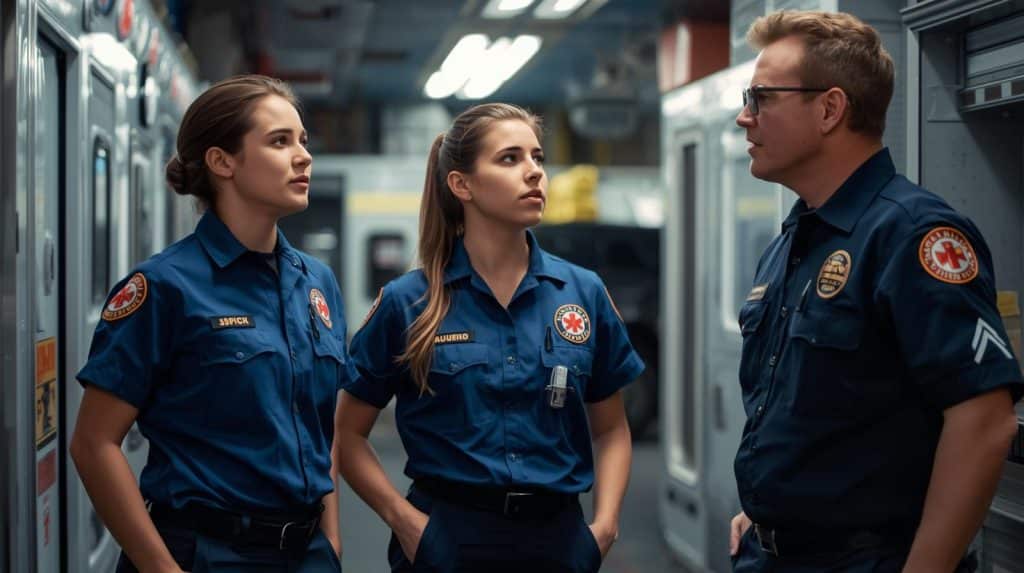
EMTs are often the first medically trained people you see in an emergency. They work on ambulances, in fire departments, at events, and sometimes in hospitals or clinics as support staff.
Levels of EMT
Depending on the state or country, there can be different levels of prehospital providers. In the U.S., you’ll commonly hear:
- EMR (Emergency Medical Responder) – Very basic level, often used by police or firefighters
- EMT (Emergency Medical Technician) – The core basic life support provider
- AEMT (Advanced EMT) – Can start some IVs and give more medications (varies by state)
- Paramedic – The highest prehospital level, capable of advanced life support
People often confuse EMTs with paramedics. A paramedic has more training and can perform more advanced procedures, but both are part of EMS. Which leads to the next key term.
What Does EMS Mean?
EMS stands for Emergency Medical Services. EMS is the entire system that responds to medical emergencies — not just a single role or individual.
EMS includes:
- 911 dispatchers who answer the call
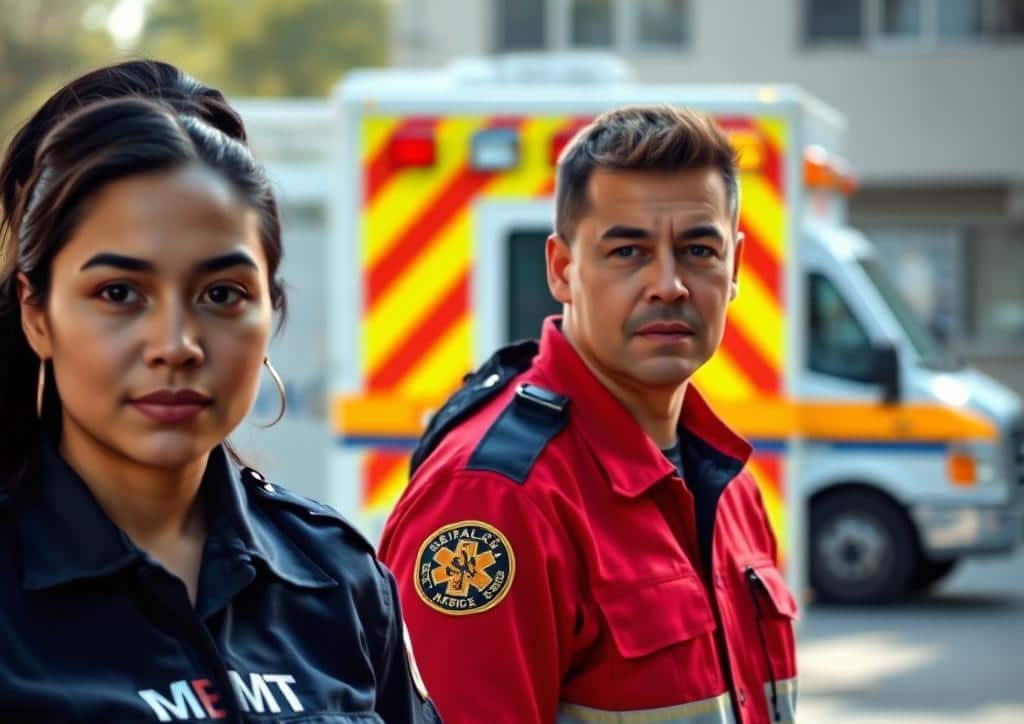
- EMTs and paramedics on ambulances
- Fire department medical responders
- Air medical crews (helicopter/flight nurses and paramedics)
- Supervisors and medical directors
- Communications systems, protocols, and equipment
In other words:
EMT is a job title. EMS is the whole system.
If you think of EMS as a sports team, EMTs and paramedics are the players on the field, but EMS also includes the coaches, playbook, equipment, and stadium.
EMT vs EMS: Key Differences
1. Person vs System
- EMT = An individual healthcare provider with defined training and certification.
- EMS = The organized network of people, equipment, and procedures that deliver emergency medical care.
2. Scope
- EMT: Focused on hands-on patient care — assessing, treating, and transporting.
- EMS: Covers everything from the moment someone calls 911 to the handoff at the hospital, plus planning, training, and quality control.
3. Training
- EMT training: Usually a structured course (often 120–200+ hours) that teaches emergency care skills, followed by certification exams.
- EMS training: Not a single course. Different roles in EMS require different levels of education — dispatchers, EMTs, AEMTs, paramedics, and leaders all train differently.
4. Responsibility
- EMT: Responsible for the care they personally provide to patients, following protocols and medical direction.
- EMS: Responsible for the entire emergency care system in an area — response times, staffing, protocols, equipment, and coordination with hospitals.
How EMTs Fit Into the EMS System
EMTs are a core component of EMS. Here’s how they fit in:
- The 911 Call
A dispatcher answers and gathers information. They decide what kind of EMS units to send — maybe an EMT-staffed ambulance, a paramedic unit, or both. - Response
EMTs arrive on scene, assess the situation, and begin treatment. They may work alongside firefighters, police, and paramedics. - On-Scene Care
EMTs stabilize the patient, manage immediate life threats, and prepare the patient for safe transport. - Transport to the Hospital
While en route to the hospital, EMTs continue treatment, monitor the patient, and communicate with hospital staff to ensure the ER is ready. - Handoff and Documentation
At the hospital, EMTs provide reports to nurses and doctors and complete documentation to ensure continuity of care and legal compliance.
At every step, they operate within the EMS system, using standard protocols, radio systems, and oversight by a medical director (typically a physician who sets clinical guidelines).
Do You “Work as an EMT” or “Work in EMS”?
You’ll often hear both.
- Someone might say: “I’m an EMT with the county fire department.”
- Or: “I work in EMS,” which could mean they’re an EMT, paramedic, dispatcher, supervisor, or another role in the emergency response system.
So:
- If you’re talking about the job title, say EMT.
- If you’re talking about the industry or system, say EMS.
Career Path: Starting as an EMT in EMS
If you’re interested in emergency medical work, EMT is usually the starting point.
Steps to Become an EMT
While details vary by location, the general path looks like this:
- Meet basic requirements
- Minimum age (often 18)
- High school diploma or equivalent
- Clean background and sometimes a health screening
- Complete an approved EMT course
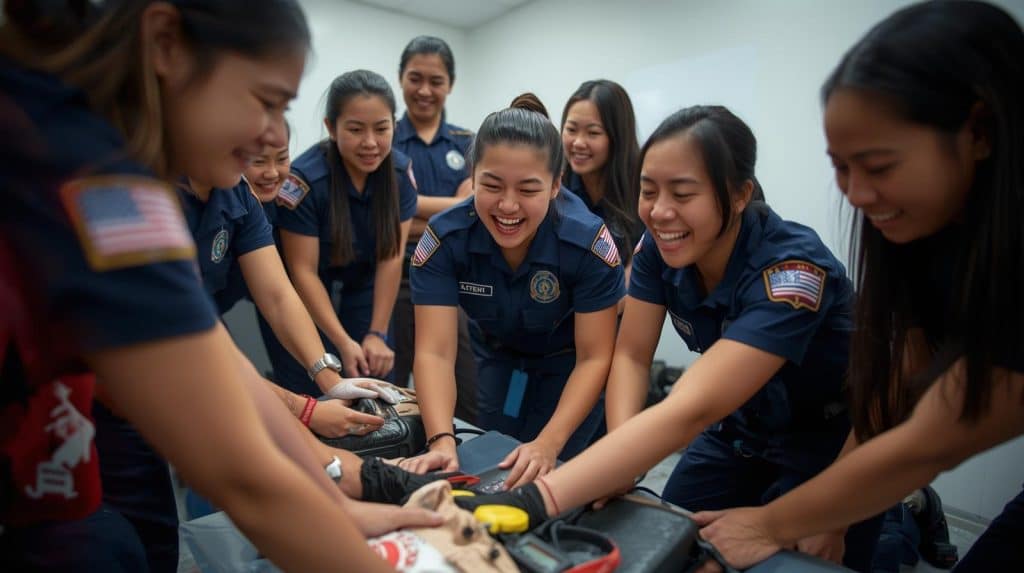
Taught at community colleges, technical schools, or EMS academies. - Pass practical and written exams
This often includes a national or state certification test. - Apply for state licensure
Once licensed, you can apply for jobs in EMS agencies, fire departments, hospitals, or private ambulance services. - Gain experience and consider advancing
Many EMTs go on to become paramedics, nurses, physician assistants, or even doctors.
Common Questions About EMT and EMS
Is an EMT part of EMS?
Yes. EMTs are a key part of the EMS system. They are one type of provider within EMS, along with paramedics, dispatchers, and others.
Is EMS the same as an ambulance service?
Not exactly. Ambulances are a big part of EMS, but EMS also includes dispatch centers, first responder units, air ambulances, training programs, and administrative roles.
Who is more advanced — EMT or paramedic?
A paramedic has more training and a broader scope of practice than an EMT. Paramedics can perform advanced life support procedures, give more medications, and use more complex equipment. Both, however, work within the EMS system.
Summary: EMT vs EMS
- EMT = Emergency Medical Technician, an individual trained to provide emergency care.
- EMS = Emergency Medical Services, the entire system that responds to medical emergencies.
- EMTs are among the primary professionals in the EMS system, working alongside paramedics, dispatchers, and other responders.
If you’re considering a career helping people in crisis, becoming an EMT is a practical and respected way to start working in EMS and make a difference on someone’s worst day.