

EMT Training Austin at Austin Community College

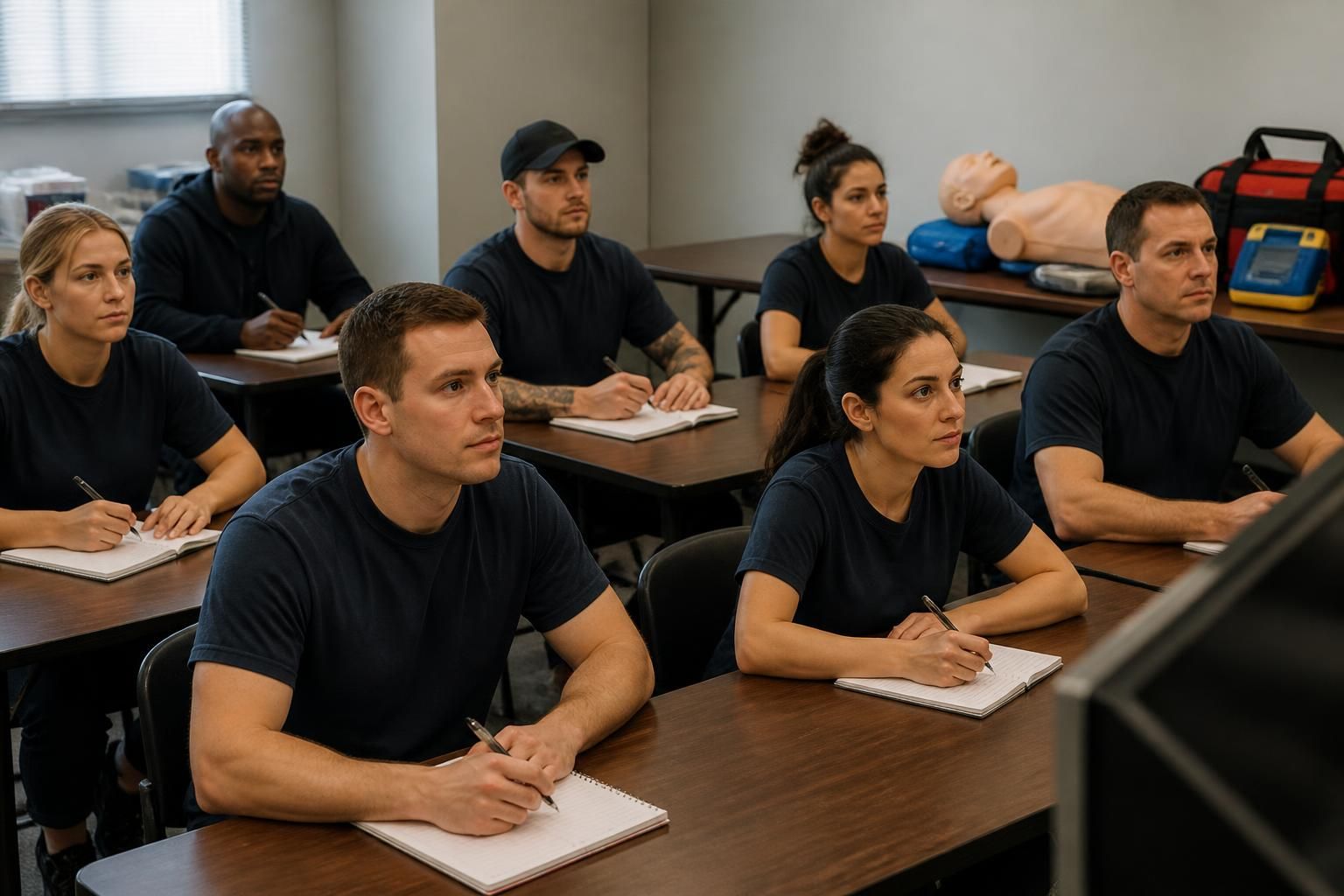
If you are comparing emt training austin options, Austin Community College offers an EMT Basic course that combines classroom instruction, laboratory practice and supervised clinical shifts within one semester. Read the program overview carefully to see how lecture, clinical scheduling and attendance rules could affect your work or family schedule.
For a broader overview of the route into the profession, read our EMT training guide alongside the college-specific information below.
Where you can train in Austin
Austin Community College (ACC) lists an EMT Basic course as part of its Emergency Medical Services Professions Program. The school describes EMT Basic as the entry-level pathway for EMS careers at ACC and distinguishes it from the college’s Advanced EMT and paramedic awards. The program page groups information for future students, including dedicated application instructions and information sessions aimed at people preparing to start at the EMT Basic level. Before planning visits or travel, request confirmation of the specific teaching location that will host the section you intend to join because the college overview does not guarantee a single campus for every offering.
- ACC offers EMT Basic within its Emergency Medical Services Professions Program.
- The ACC program page has a dedicated application and information session entry for EMT Basic.
- Confirm the assigned teaching location for your chosen section before visiting.
How the ACC EMT Basic course is structured
ACC structures EMT Basic as a one-semester program that combines classroom lecture, hands-on lab practice and required clinical shifts. The college identifies two distinct courses students must take concurrently: EMSP 1501 for lecture and lab, and EMSP 1160 for clinical education. Registering for both courses together is part of the program design. When you evaluate a particular semester offering, verify both course listings and sections since selecting a lecture that fits your schedule will not remove the clinical time commitment.
- Coursework is split into EMSP 1501 (lecture and lab) and EMSP 1160 (clinicals).
- Students register for both EMSP 1501 and EMSP 1160 at the same time.
Typical meeting times and extra practice dates
The program overview notes that most main-semester sections meet in the evenings and that summer offerings meet more frequently. ACC indicates typical evening class windows and that summer sections meet three times per week. The college also warns students about at least two additional weekend dates that may be required to meet state-mandated practical hours such as skills practice or extrication drills. Those weekend sessions are considered class dates and are mandatory, so ask for firm dates up front before you commit to a section or schedule travel for that semester.
- Evening sections are common during fall and spring semesters.
- Summer sessions meet more frequently in the daytime or as scheduled for that term.
- Expect at least two mandatory weekend practice dates during a semester.
Clinical placements and how they are scheduled
Clinical experience is mandatory at ACC and an orientation is scheduled in the first weeks of the semester. The college uses FISDAP, a clinical scheduling software, to let students choose available clinical shifts from a roster of options. Described clinical settings include 911 EMS services, hospital emergency departments, labor and delivery units and non-emergency ambulance transfers. Understand that selection is from available slots rather than an assignment guarantee; ask how far in advance clinical slots are posted, what happens if a required shift conflicts with another course, and who to contact if you need help with placement or transport to an off-campus clinical site.
- Clinical orientation generally occurs early in the semester and attendance is required.
- Students select clinical shifts through the FISDAP scheduling system.
- Clinical sites listed by ACC include ambulance services and various hospital departments.
How to start the ACC application and who to contact
ACC provides a specific EMT Basic application process page and a program FAQ to guide applicants. The program overview also points to information sessions tailored to EMT Basic applicants. For direct questions about enrollment logistics, the overview lists a named contact for the EMT Basic pathway. When you contact the program office, request a checklist of required records such as immunizations, background screens, health documentation, uniform or equipment needs, and any other items you must complete before attending clinicals. Confirm whether information sessions are being offered online or in person and whether attendance is required before applying.
- Begin with the EMT Basic Application Process page and review the EMT-specific FAQ.
- ACC lists a named EMT Basic contact for application questions.
- Ask for a written checklist of health, background and equipment requirements before clinicals.

Program progression, testing and academic rules at ACC
ACC describes academic standards and progression rules for students in EMSP classes. The overview specifies that unit exams and certain skills must be passed and that retest allowances exist with limits. The department enforces attendance rules including a maximum allowable absence from classroom hours and mandatory clinical attendance. For students moving into advanced training at ACC, certification as an EMT-Basic is the stated entry-level requirement. The program also notes that satisfactory performance is needed to remain in the EMS program and that some courses require a grade benchmark to progress; check the current course syllabus for the exact passing grade required and retest policies for the semester you plan to attend.
- Unit exams and specified skills have pass requirements with limited retests.
- Students must meet ACC attendance rules and attend all assigned clinicals.
- EMT-Basic certification is the entry-level credential for ACC advanced EMS programs.
What finishing ACC’s EMT Basic means versus National Registry steps
Completing ACC’s EMT Basic course is a necessary step but is not identical to national certification or automatic permission to work. The National Registry Full Education Program pathway requires successful completion of a state-approved EMT course that meets or exceeds the National EMS Education Standards, and the course must have been completed within the last two years. Program directors must verify course completion on the National Registry website. After verification, candidates must pass the National Registry EMT certification examination and also satisfy a State EMS Office approved basic life support skills competency requirement. Because some states or programs integrate the skills competency exam into the course, ask ACC whether the course includes the state-approved skills verification or whether you will need a separate skills check after course completion. Also confirm with the Texas State EMS Office or prospective employers what state-level hiring or licensure steps follow national certification, since course completion and Registry certification do not automatically confer permission to work in every setting.
- ACC course completion must be verified by the program director on the National Registry site for full education program candidates.
- You must pass the National Registry cognitive exam and meet your State EMS Office approved BLS skills competency requirement.
- Confirm whether ACC includes the state skills competency verification or whether you must complete it separately.
Applying to the National Registry and timing tips
To apply for the National Registry exam, create a Registry account, choose the EMT initial application, verify your personal information, pay the required fee and monitor your Candidate Dashboard for approval and an Authorization to Test. Because portions of certification and eligibility windows are time-limited, coordinate your course completion date and exam scheduling so that your program director verification and the Registry application fall within the time frames required by the Registry. If you have questions about timelines, ask ACC which staff member submits verification and how long the process typically takes after course completion.
- Create a National Registry account and submit the EMT initial application.
- Monitor your Candidate Dashboard for Authorization to Test.
- Coordinate course completion and Registry application timing and ask ACC who handles verification.
Practical checklist before you enroll
Before you commit to a specific section, confirm these items with ACC so you can plan realistically: the exact campus and classroom that will host your cohort, full meeting days and times including any evening or weekend practice dates, the mechanics of clinical scheduling and when FISDAP slots are released, whether the course includes the State EMS Office approved skills competency verification, required immunizations and background screening processes, expected equipment or uniform items you will need to buy, and the contact who will submit National Registry verification at course completion. Having those answers in writing will help you balance work and clinical commitments and reduce surprises during the semester.
- Confirm campus, meeting schedule, and mandatory weekend dates.
- Clarify clinical scheduling procedures and transport expectations for off-campus clinicals.
- Get written confirmation who will submit Registry verification and whether the course covers the state skills competency.
Common questions
Will completing ACC’s EMT Basic immediately allow me to work on an ambulance?
No. Course completion is not the same as national certification or state-level authorization to work. After finishing a state-approved EMT course you must complete National Registry steps and any additional state or employer permissions. Confirm Texas-specific hiring or licensure requirements with the Texas State EMS Office or potential employers.
Related Posts:


How do I know ACC will verify my course completion with the National Registry?
The National Registry pathway for full education programs requires the program director to verify completion. Ask ACC which staff member performs that verification and how long the verification typically takes after you finish the course. This helps ensure your Registry application and exam scheduling fit within the Registry timelines. Please confirm these details with the ACC EMT program office.
