EMT Training Albuquerque at Central New Mexico Community College

Central New Mexico Community College offers an EMT-B Certificate of Achievement for people looking at EMT training in Albuquerque. Its Emergency Medical Services page brings together award options and enrollment resources. If you are new to EMS, begin by checking the EMT-B route and its requirements.
For a broader overview of the route into the profession, read our EMT training guide alongside the college-specific information below.
Quick overview of the CNM EMT option
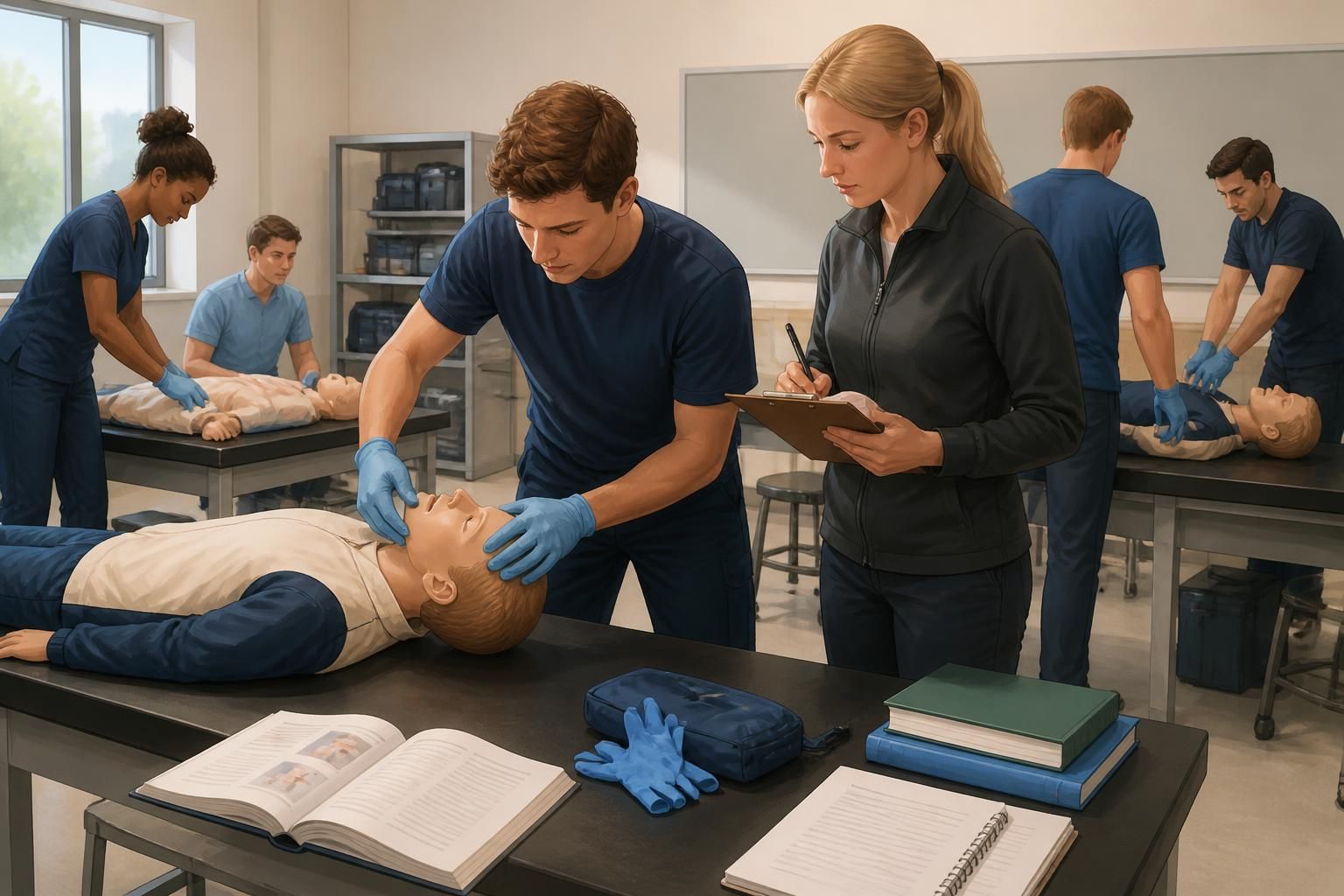
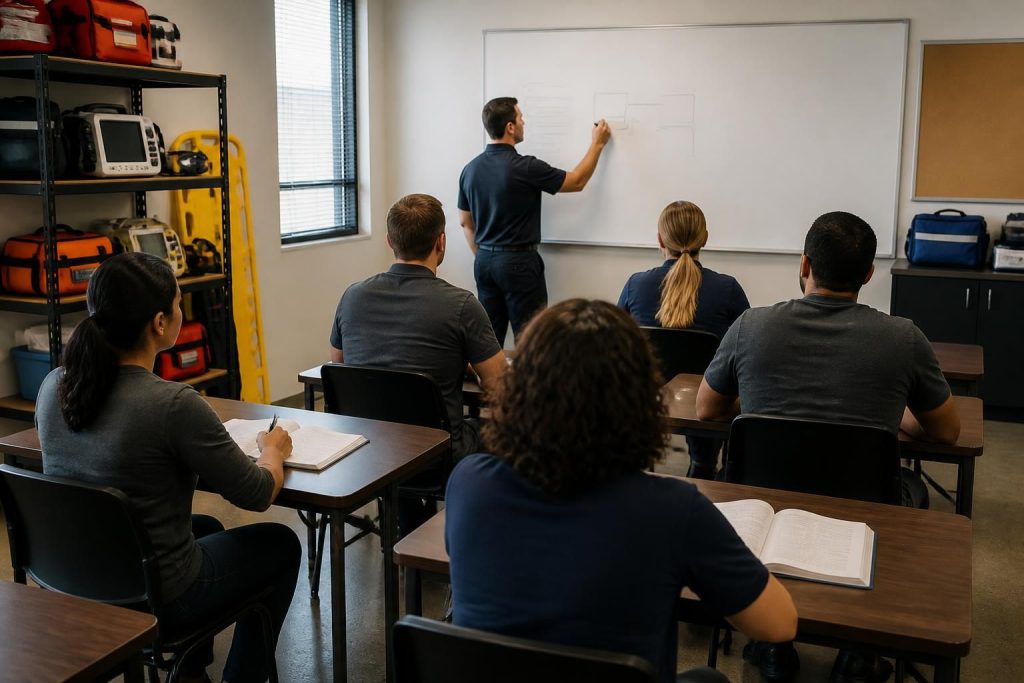
Central New Mexico Community College operates an Emergency Medical Services program that includes an Emergency Medical Technician (EMT-B) Certificate of Achievement. CNM describes the EMT and related EMS credentials as a combination of classroom learning, hands-on laboratory practice, and clinical experience intended to prepare students for entry level emergency care roles. Before registering, CNM asks prospective EMT students to review the EMT basic compliance requirements the college publishes.
- EMT-B Certificate of Achievement is offered through CNM
- CNM combines classroom instruction, hands-on labs, and clinical field experiences
- Prospective students are asked to review CNM’s EMT basic compliance requirements before registering
Verified local program facts you can confirm on CNM pages
When researching CNM as your EMT training option, here are specific facts stated on CNM pages that you can rely on and verify directly with the college. These items are published by CNM and are part of the program description and policies the college provides to prospective students.
- CNM lists an Emergency Medical Technician (EMT-B) Certificate of Achievement within its EMS offerings
- CNM identifies classroom instruction, laboratory skills practice, and clinical experience as components of EMS coursework
- CNM requires a drug screen for all students entering EMT-B, AEMT, or Paramedic portions of the EMS program
- The Paramedic concentration is listed as accredited by CAAHEP upon the recommendation of COAEMSP
- CNM publishes program materials such as an EMS Handbook and EMT basic compliance requirements for students
What EMT-B coursework at CNM emphasizes
CNM frames its EMS curriculum around three learning domains: cognitive knowledge, psychomotor skills, and professional behaviors. For entry level EMT training that means courses will cover patient assessment and basic emergency interventions in classroom lessons and then reinforce those lessons with supervised practice in skills labs and required clinical or field experience. CNM also notes updated course prefixes for EMS classes, which they list under their Schedule of Classes.
- Coursework addresses knowledge, hands-on skills, and professional behavior
- Lab practice and clinical placements are part of the student learning plan
- Check the current Schedule of Classes for term offerings and EMSS course prefixes
How to begin enrollment at CNM
CNM directs prospective students to use the college’s standard entry tools: request more information through CNM outreach, consult the Schedule of Classes to find offered sections, and follow the Become a Student steps to apply and register. CNM explicitly instructs students to read the EMT basic compliance requirements before enrolling, so start there to understand immunizations, background checks, or other compliance items the program will expect.
If you plan to enter an EMS track that requires department approval, such as intermediate or paramedic concentrations, CNM uses a screening and approval process. For EMT-B certificate enrollment, contact CNM EMS staff to confirm whether the specific EMT-B section you want requires any special permissions.
- Begin with CNM’s Request Info, Schedule of Classes, and Become a Student pathways
- Review the EMT basic compliance requirements and the EMS Handbook early
- Contact CNM EMS staff to confirm prerequisites and whether a section requires department approval
Screening, prerequisites and required checks to expect
CNM says some EMS tracks have limited places and require screening forms and department approval. Its admission policy requires students entering EMS programs to pass a drug screen. The college also prohibits cannabis use by EMS students, even though it is legal in New Mexico. Ask CNM which immunizations, background checks, physical examination records and other compliance documents are required for EMT-B clinical placements.
- A program drug screen is required for students entering CNM EMS programs
- Some EMS concentrations at CNM use screening forms and department approval
- Confirm required immunizations, background checks, and clinical compliance items with CNM
How completing CNM coursework relates to National Registry requirements
Successfully finishing an EMT course at CNM is an essential step but not the same as earning National Registry certification or state permission to practice. Under the National Registry full education program pathway, candidates must complete a state-approved EMT course that meets or exceeds the National EMS Education Standards. That course completion must be verified by the program director on the National Registry site and must have occurred within two years of the Registry application.
In addition to program completion verification, National Registry certification requires passing the Registry cognitive examination and meeting a State EMS Office approved BLS skills competency requirement. Some states or courses integrate the skills examination into the program; others require separate skills verification. Ask CNM whether the EMT-B class you take includes the local skills competency check or whether you will need to arrange additional verification through the State EMS Office.
- Program director verification of course completion on the National Registry site is required and the course must be within two years
- National Registry certification requires passing the cognitive exam and meeting a State EMS Office approved BLS skills competency requirement
- Confirm whether CNM includes the skills competency assessment in the EMT-B course or whether you must complete separate state verification
Practical next steps, contacts and what to ask CNM
Before you enroll, get answers to a short list of practical questions from CNM: which campus or classroom is assigned for the EMT-B section you plan to take, the exact prerequisite list and timeline for meeting those prerequisites, who in the program will verify your course completion on the National Registry site, and the full list of clinical compliance items you must provide. CNM publishes a main program phone number for EMS inquiries and lists program staff roles and extensions; use those contacts to reach the appropriate person.
Also budget for testing and compliance items by asking CNM which costs to expect: NREMT application and testing fees, textbooks, a uniform or personal protective equipment, vaccination or titers, background check and drug screen fees, and any lab or clinical placement fees. Finally, contact your State EMS Office after completion to confirm any state-level authorization steps required to work as an EMT.
- Call CNM EMS main number and request the staff member who handles EMT-B enrollment and completion verification
- Ask CNM to confirm assigned teaching location for the term and the prerequisite timeline
- Check expected cost items: NREMT fees, books, uniforms, clinical compliance, and drug screen costs
- Contact your State EMS Office to learn current state authorization steps after course completion
Common questions
Will completing the CNM EMT course automatically let me work as an EMT?
No. Course completion is not the same as National Registry certification or state authorization to practice. You must have your course completion verified on the National Registry site, pass the National Registry exam, meet the State EMS Office BLS skills competency requirement, and follow any state licensing steps. Contact CNM and your State EMS Office to confirm current requirements.
Related Posts:
Who do I contact at CNM about EMT enrollment and verification?
CNM publishes a main EMS program phone number for inquiries and lists program staff roles and extensions. Call the CNM EMS main number and ask to speak to the program director or the staff member responsible for EMT-B enrollment and program completion verification.